- Industry expectation vs Bandcamp identity
Streaming norms position playlists as passive listening. I redesigned them as active support, foregrounding artist context and purchase at every track. - Ownership constraint as differentiation
Users can only create playlists from tracks they’ve purchased. We turned this constraint into differentiation, making every playlist proof of real artist support.
Role
Led end-to-end product design, research, and handoff across web and apps
Team
Cross-functional partnership between Design, Product, Engineering, Artists & Label Reps and Marketing.
Timeframe
Jan-June 2025
Problem/Opportunity
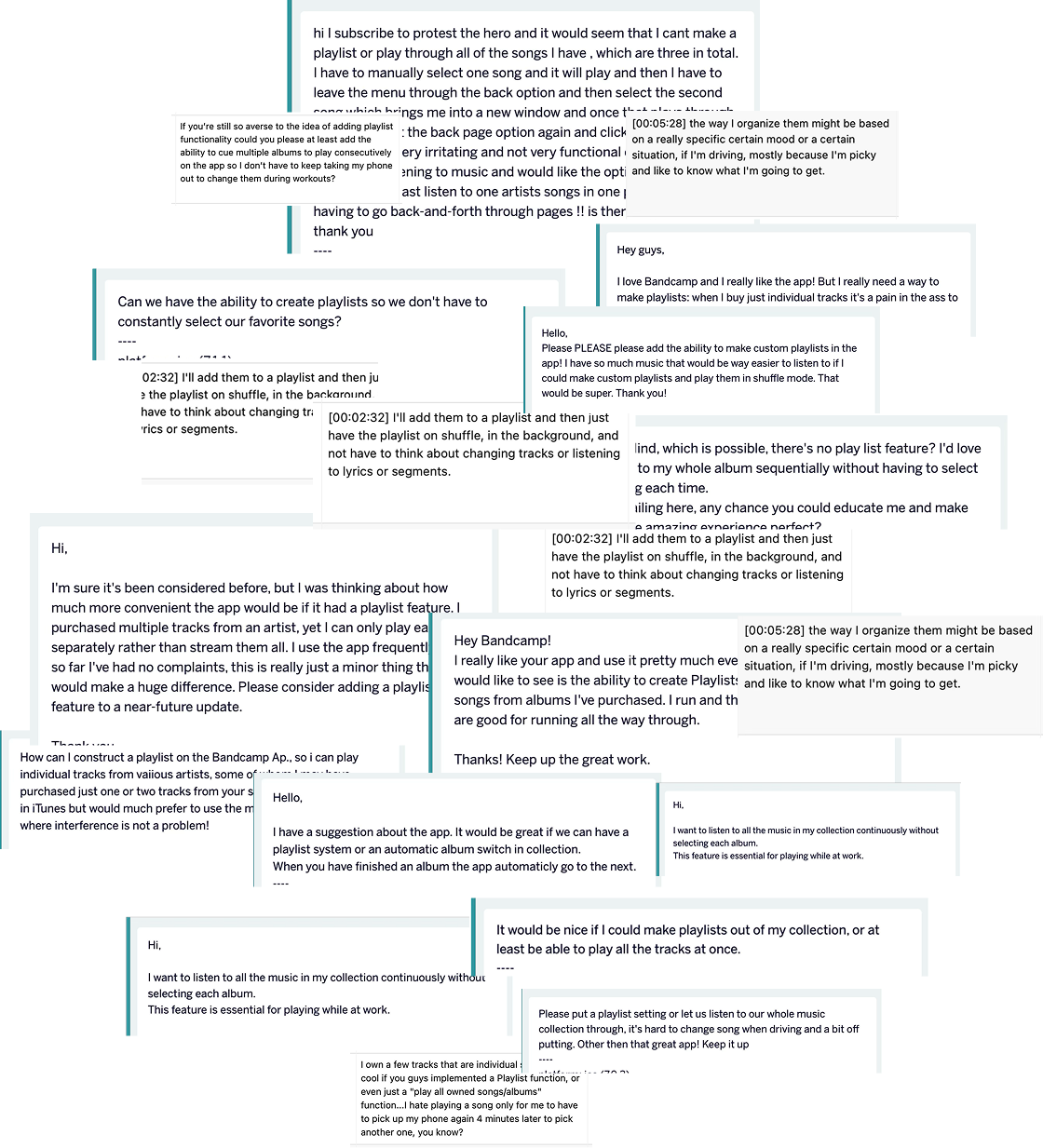
Key Research Insight
Insights from the Playlist Discovery Study (link to full deck) shaped the goals below. New and existing users described a lack of human presence in playlists, longing for curator context and expressiveness. Algorithmic feeds felt passive and disposable; human voice signalled intention and taste.
Opportunity: Make discovery explicitly human-led.
It’s like eating a lot of junk food (Spotify playlists) takes away the discovery process for me… I like to know what someone else thinks about that song. There has to be an element of critical thinking.
— “Crate Digger” persona, power users that make up 10% of buyers
Product Goals
- Encourage deeper exploration of an artist or albun beyond single tracks
- Create a new discovery surface grounded in ownership
- Support meaningful sharing between fans
Design Principles
- Playlists should feel curated, not algorithmic
- Artist context and purchase options remain visible
- Avoid turning Bandcamp into a passive listening feed
Role & Collaboration
Discovery
- Partnered with product to define the opportunity space and success criteria
- Mentored a junior designer through research synthesis and early concept exploration
Define
- Led cross-functional design sprints with product and engineering to shape the v1 scope
- Facilitated decision-making around feature trade-offs (e.g. sharing, search, collaboration)
Prototype
- Conducted usability testing and synthesised findings into actionable iteration points
- Delivered annotated specs and motion guidance for engineering handoff
Launch
- Defined phased rollout strategy
- Tracked early engagement metrics to inform next steps
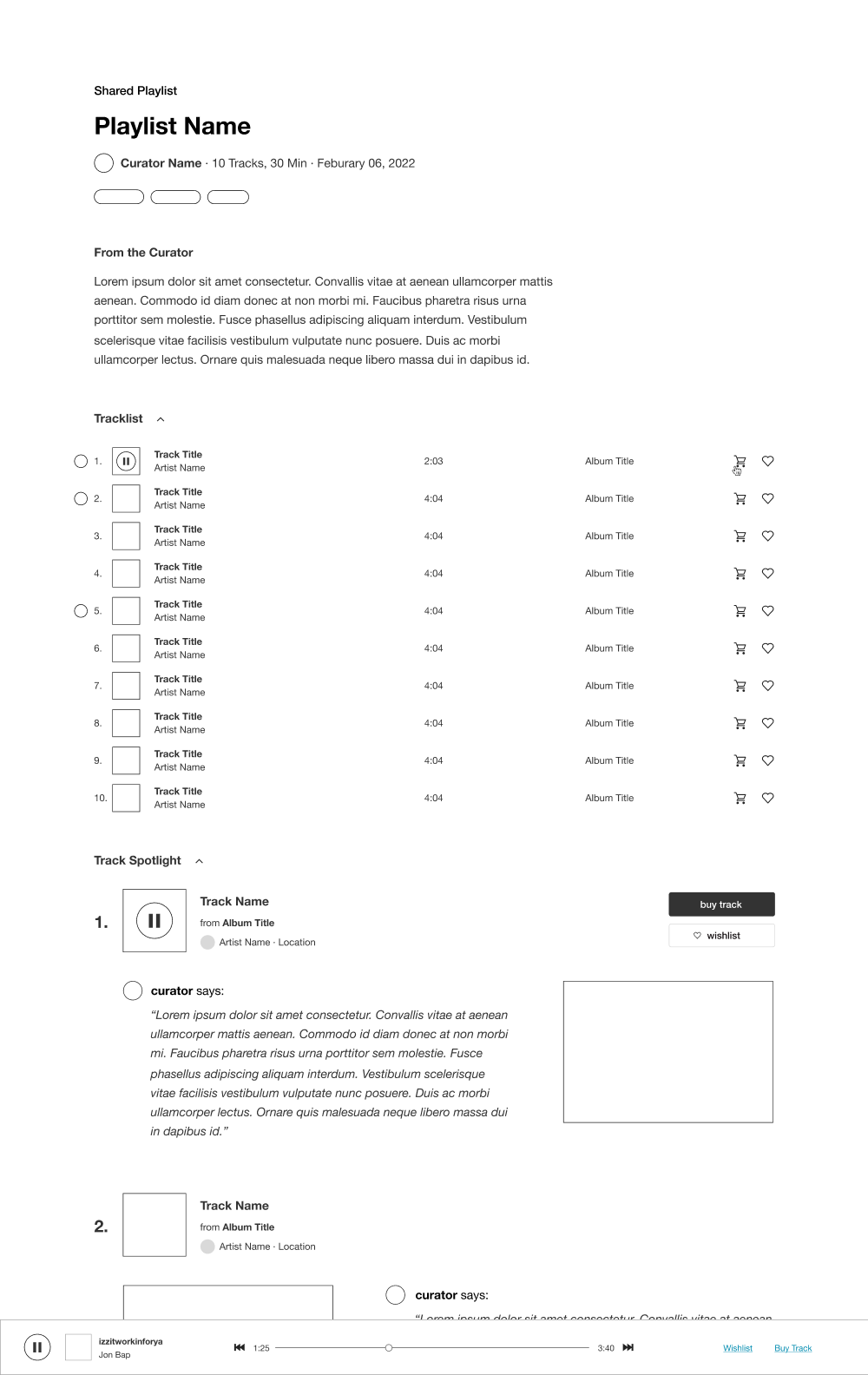
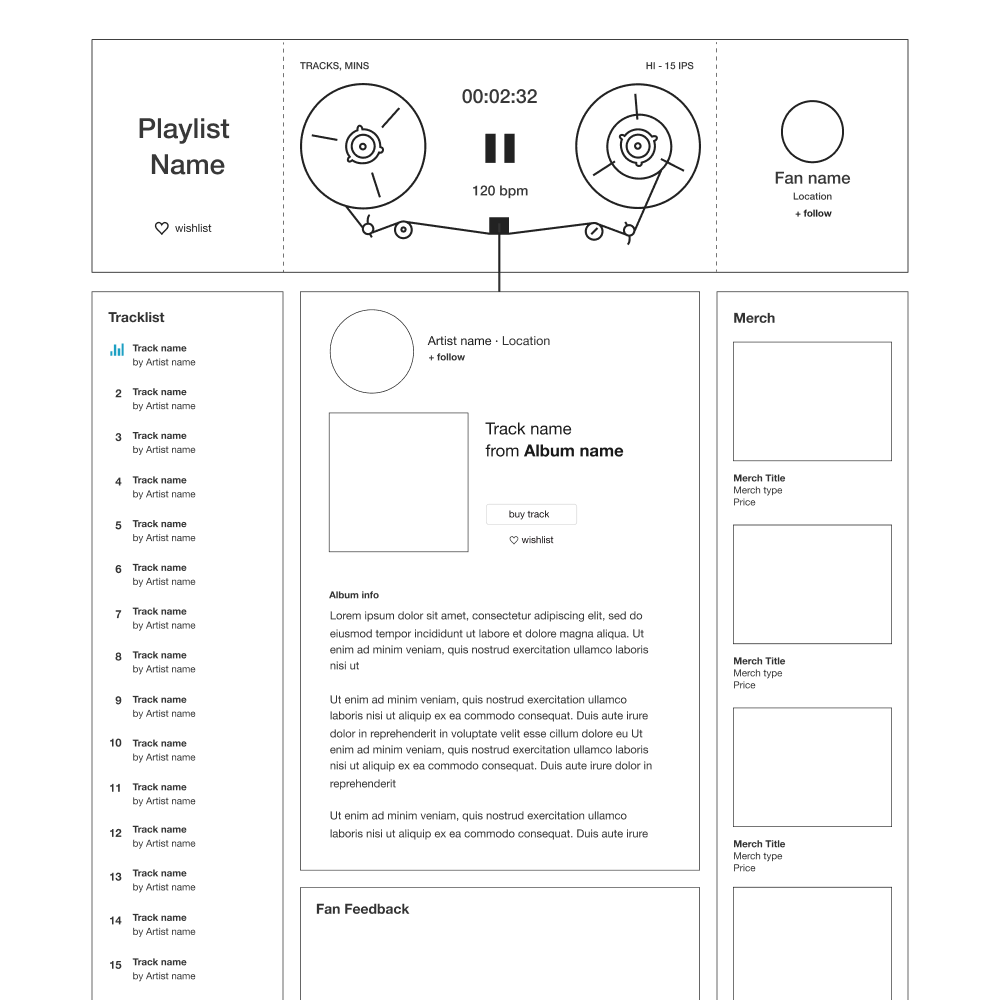
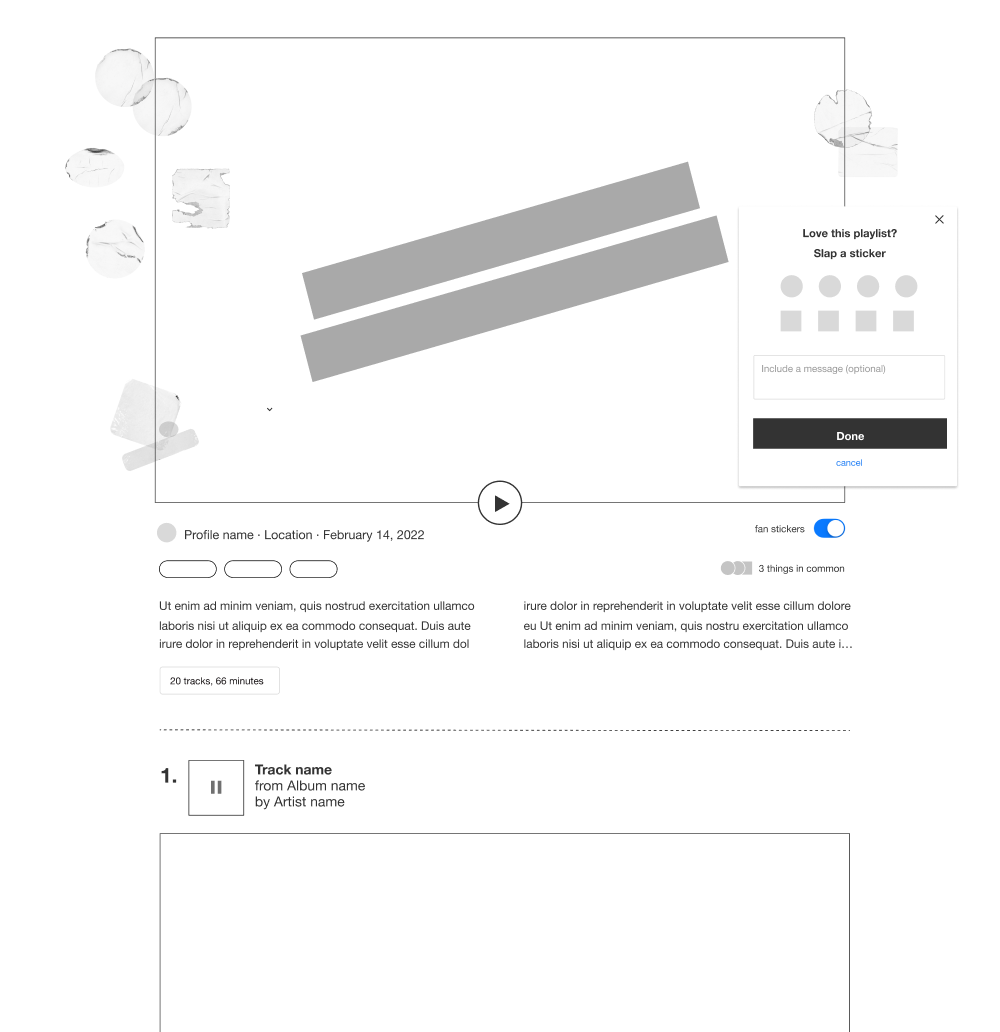
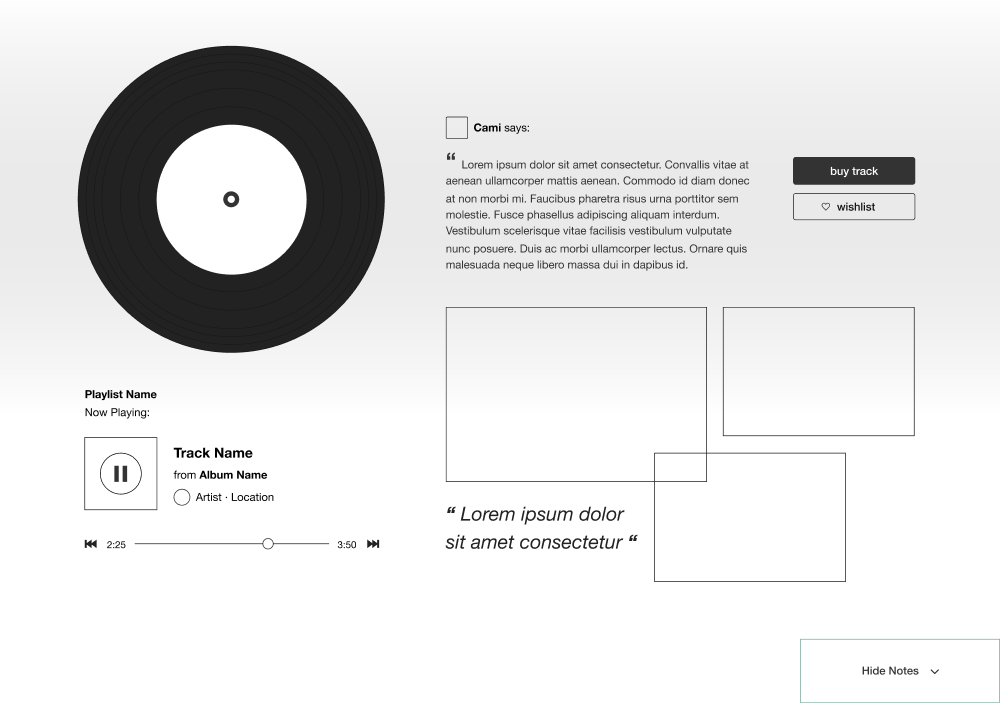
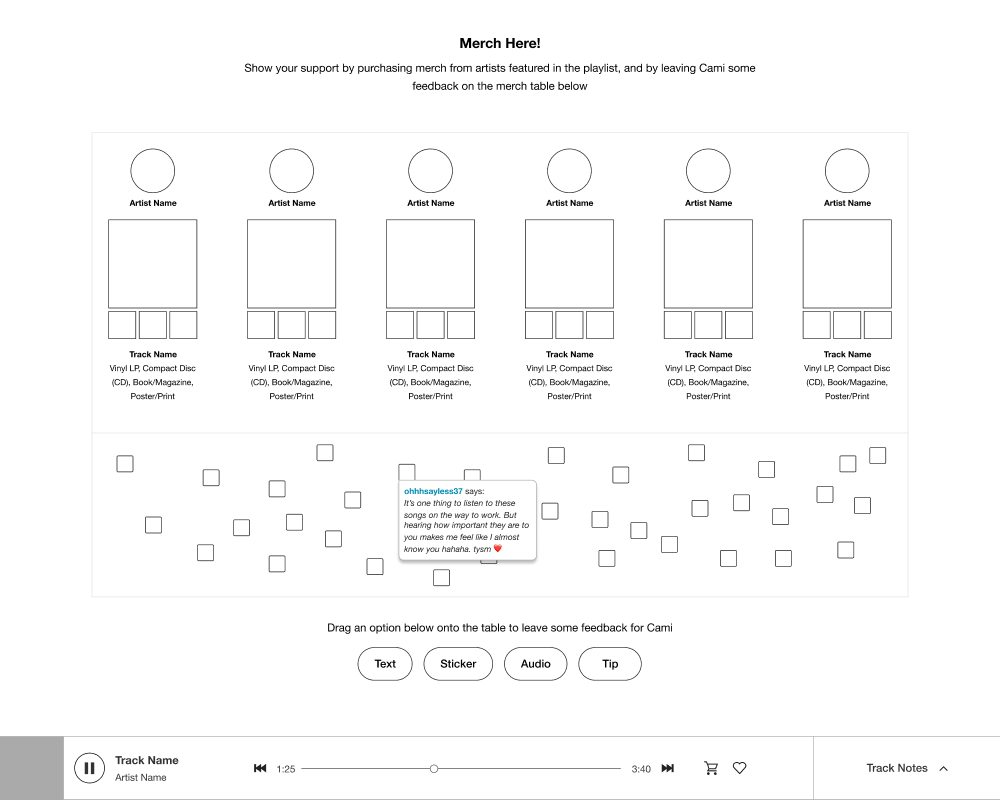
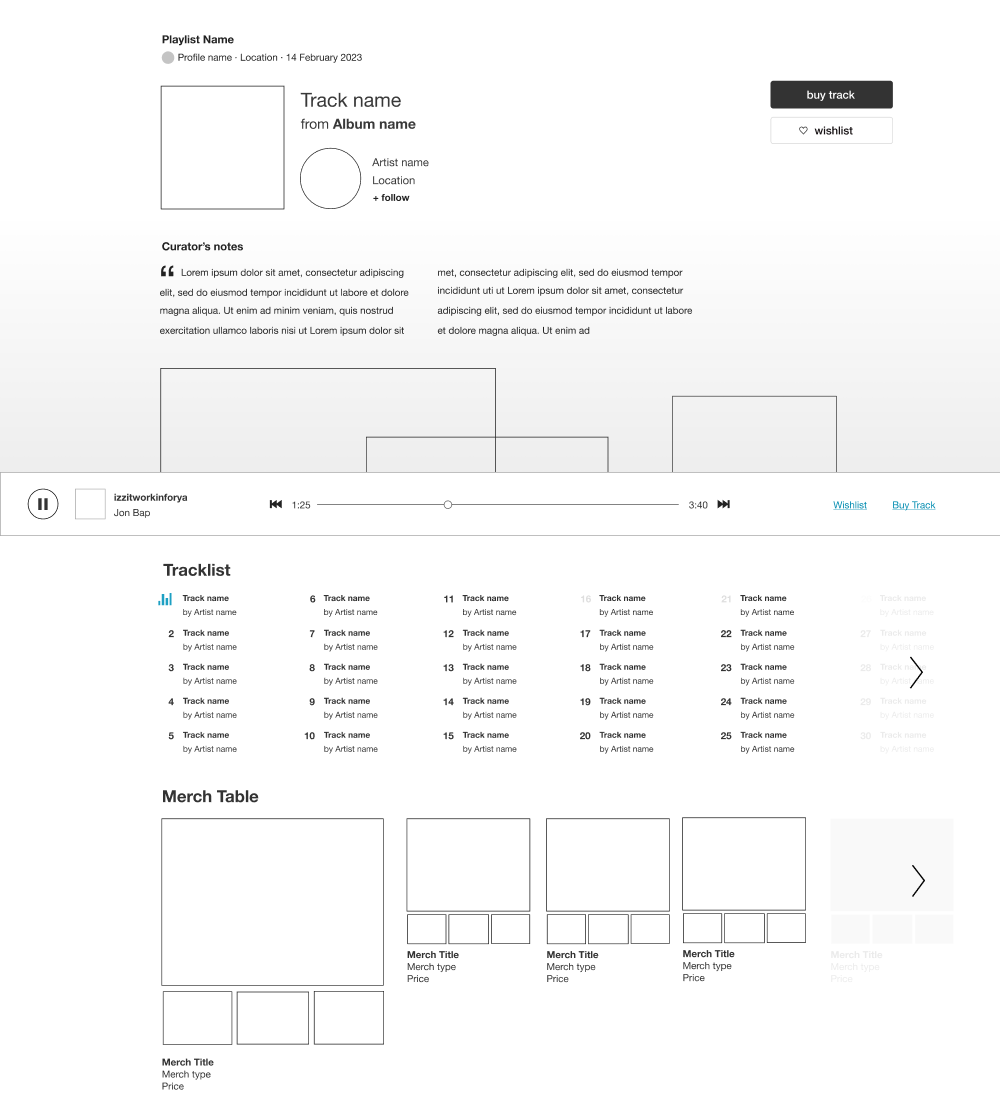
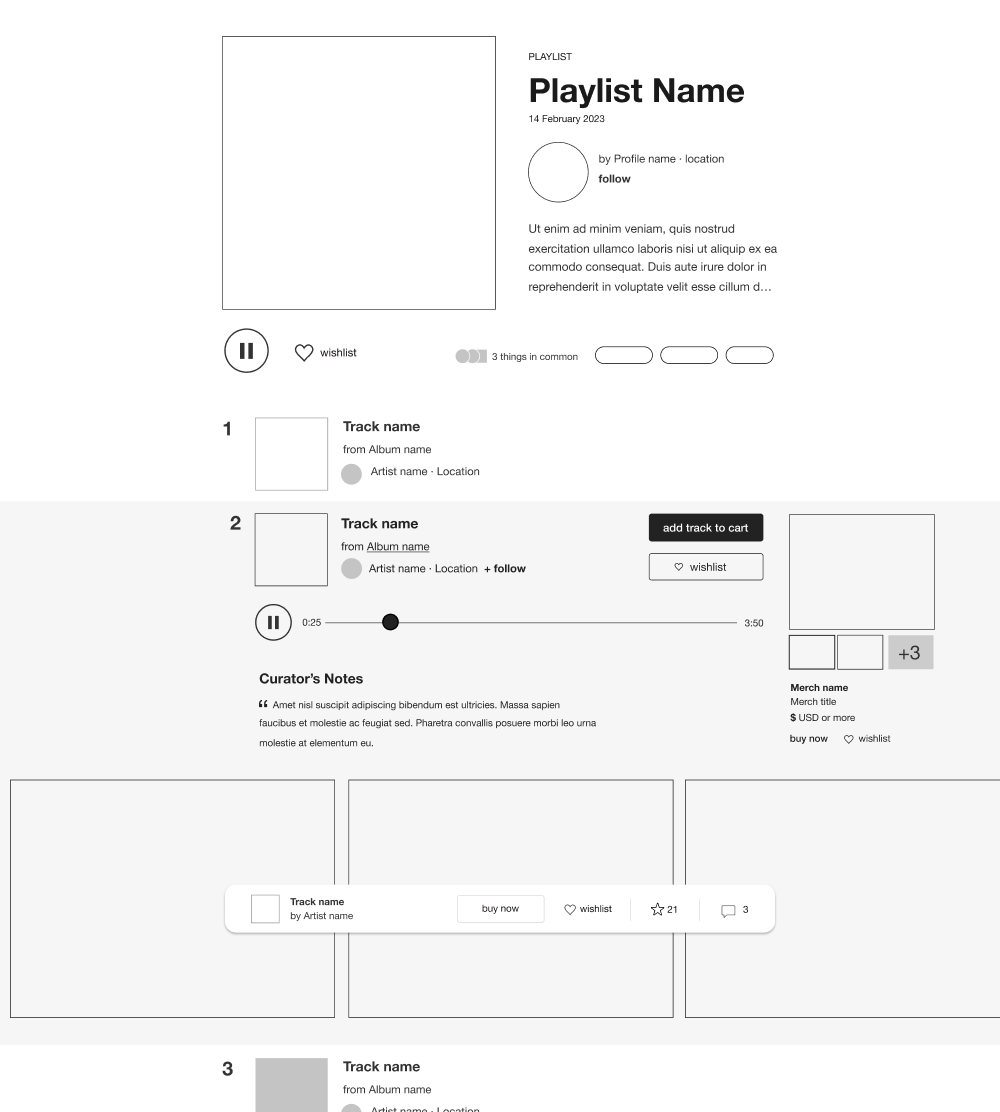
Exploration Sketches
Low-fidelity concepts exploring different ways playlists could work and feel.
Final Designs
By reframing the playlist as a digital liner-note journey, the design shifts discovery from passive consumption to intentional support of independent artists.
1. Strategic Info Hierarchy
De-emphasising the tracklist creates intentional friction, shifting focus from tracks to artist and prioritising story over utility.
4. Collapsed Discovery-to-Support Funnel
Placing merch alongside the music strengthens the tactile connection to the artist and shortens the path to purchase.
6. Sustained Discovery Loop
Related editorial content and playlists guide users to discover more.
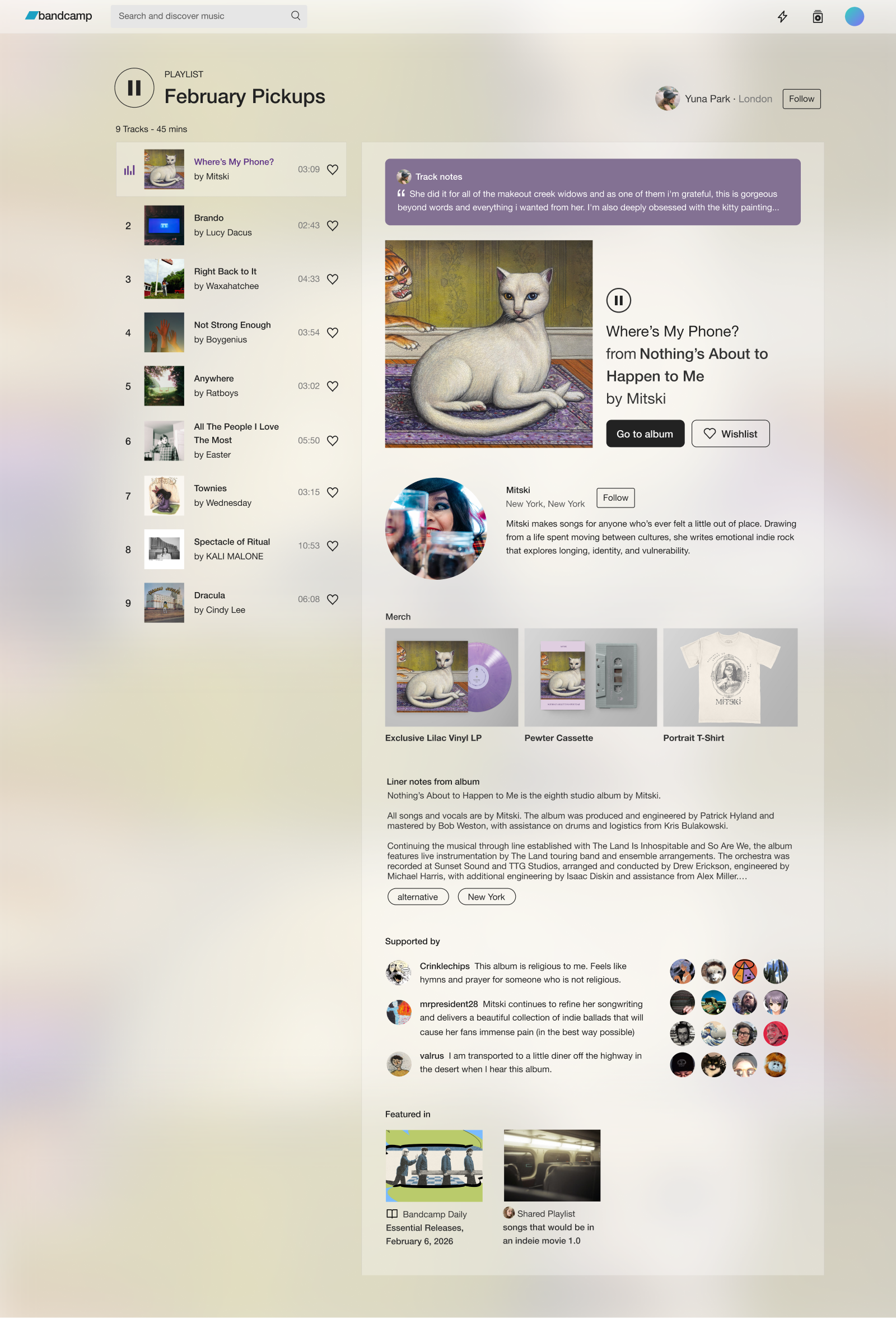
2. Human-Led Differentiation:
Track Notes surface curator voice without competing with artist content and embedded directly into discovery.
3. Focused Conversion Path:
The primary CTA shifts intent from single tracks to full-album support.
5. Community-Led Validation:
Showing fan buyers and reviews turns transactions into community engagement while reinforcing artist support.
Impact
Metrics showing how launching playlists drive engagement, community participation, and artist support.
As of Jan 2026
+ 2 X
Spend among playlist creators
30% of users who create playlists now support artists more actively.
~Half of playlist visits result in album exploration
41% of playlist views lead to a visit of the album page, increasing intentional engagement.
Fans are curating their own collections
38% of playlists have tracks wishlisted by other users, surfacing community-led discovery.
12% of playlist interactions lead to a purchase
Users shift from passive listening to active support of independent artists.
What's Next
A beta version has shipped with full feature updates planned for 2026.